Australia
 Canada


Difference Between SEO and SEM : Which Strategy is The Best?
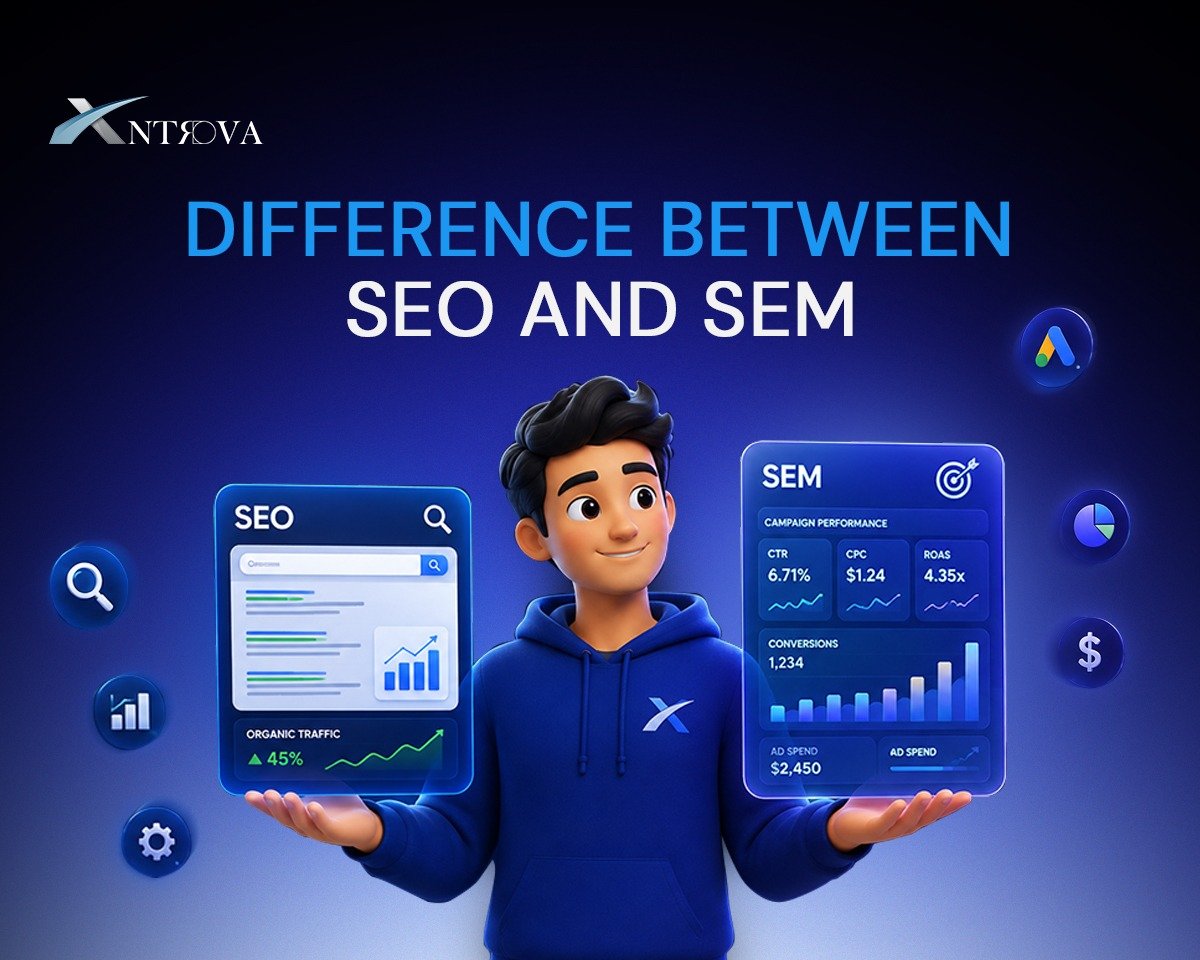
The question of the difference between SEO and SEM has become one of the most common ones in the field of digital marketing. While both practices are different from one another, many businesses, both small-scale and large ones, often use the term interchangeably.
Although both strategies have different practices, they can be used for the same goals. These goals can be to build visibility, increase awareness, or promote authority. However, despite the goals being the same, the amount of time and effort required can differ significantly. Because of such factors, understanding the differences between these two practices has become more crucial than ever. Therefore, in this article, we will guide you through the differences, all the while sharing the best strategies.
Difference Between SEO and SEM: Quick Comparison
| Feature | SEO | SEM |
| Full form | Search Engine Optimisation | Search Engine Marketing |
| Traffic Source | Organic search results | Paid search ads |
| Cost | No direct cost | Requires advertising budget |
| Time to see results | Can take months | Can generate traffic immediately |
| Visibility | Appears in organic listings | Appears at the top of search results as “ads” or “sponsored” |
| Sustainability | Long-term traffic growth | Traffic stops when ad spending stops |
| Performance tracking | Organic rankings and website metrics | Ad clicks, conversions, and campaign metrics |
What is SEO?
SEO stands for Search Engine Optimisation. This practice revolves around improving a website’s visibility organically on search engine results. Through higher visibility, the practice helps businesses to rank well on relevant searches on platforms like Google and Bing. As a result of this, it helps the business to attract relevant audiences and drive traffic, all the while building authority.
Unlike paid advertising, the majority of processes are done organically, which becomes a key component for search engine optimisation and search engine marketing differences. When it is done correctly, it can help build sustainable growth for your business. Therefore, it is best to invest in reliable SEO services in Delhi to ensure optimal results without raising any issues.
SEO Categories
The entirety of SEO revolves around four categories. Inside each category, there are a multitude of practices that help you to improve the organic ranking of your website. Below, we have listed these categories to help you better understand the difference between SEO and SEM in digital marketing.
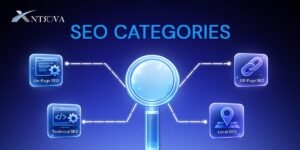
On-Page SEO:
This category focuses on optimising the content and elements of the website. Keyword research is one of the most crucial practices in this category. This is because the activity allows you to effectively target users who might be interested in your business. Aside from this, other elements, like page titles, URLs, headings, and internal linking, are also essential.
Off-Page SEO:
This category is all about how your website is perceived externally. This category involves building links, which act as external signals. These links are also often referred to as Votes of Trust. As a result of building these links, you will be able to signal trust and authority for your business.
Technical SEO:
This category involves improving the experience of your website. This involves improving the website’s architecture and back-end elements to improve the overall performance on search engines. Search engines like Google favour websites that have an optimal user experience. Therefore, technical SEO remains one of the most crucial aspects of the overall practice.
Local SEO:
This category is specifically for location-based businesses. As it is already for a specific location, it targets nearby users. Google Business Profile is a known tool of this category, as it displays business information on local searches and Google Maps.
What is SEM?
The full form of SEM is Search Engine Marketing. This is a paid search marketing method that focuses primarily on efforts like PPC. The method is not only limited to Google, but it can also be used for other search engines like Bing. Through this method, you can target audiences and improve visibility in search engines. However, do note that one notable difference between SEO and SEM strategies is the broader context of search marketing.
Aside from this, many businesses, both small and large, are wondering about the value of SEM. This is because of the rise of AI-powered searches, like Google’s AI overviews. Because of these overviews, it has become considerably more difficult to keep the cost in check.
Despite such challenges, SEM can help you target your ideal audience and quickly get results. Nonetheless, you will still need to ensure effective budget management to get the best possible results. Because of this, it is ideal to invest in PPC services in Delhi to ensure a smooth process.
Key Features of SEM
In Search Engine Marketing, there are several key features. Now that you understand what this practice is, let’s discuss the working principles of SEM.

Keyword Targeting:
For paid searches, keywords are among the most important aspects. By targeting these keywords, you can display your ads to the audience who searches for relevant terms.
Bidding:
As SEM is a paid method, you will need to place bids on keywords to appear on sponsored search results.
Ad Creation and Optimisation:
To ensure that the user actually clicks on your ad rather than just seeing it, you will need to create compelling ad copy for different channels.
Quality Score:
It is one of the most essential Google Ads metrics. Google uses this metric to understand whether your ads are worth showing to the audience.
Budget Control:
In SEM, the budget can quickly spiral out of control. Therefore, effective budget management is required to ensure optimal performance without overspending.
Audience Target:
Aside from keywords, you can also directly target the audience based on their demographics (age, gender, location, etc).
Analytics and Reporting:
The tracking and reporting of SEM can differ depending on the search engine. For example, you can track the performance metrics of your Google Ads directly through Google Analytics.
SEO vs SEM: Key Differences
Understanding the differences between SEO and SEM is essential if you want to choose the right strategy for your business. Therefore, we have shared the main distinctions between these two practices below.
1. Investment
The most notable difference between SEO and SEM is the amount of financial and resource investment required. Also, note that these investments can vary significantly depending on your target audience and industry competition.
In SEO, the practice does not have a direct financial cost like paid advertisements. However, it requires a significant investment of both time and effort. Aside from the SEO and SEM strategy and execution, you will also need to invest both time and effort in factors like website optimisation and content production.
SEM, on the other hand, can provide quicker visibility and results. However, it requires a significant financial investment. This investment is required to maintain ranking in paid searches and achieve the desired ROI.
2. Time to Results
The timeline to see results from SEO and SEM differs greatly. With SEM, you can gain visibility as soon as your campaign goes live. While the visibility is immediate, achieving a positive ROI can take time.
As for SEO, the practice takes a considerable amount of time to show results. This is because of the already existing competition for the keywords. On average, it can take around three to six months to see notable results. However, do note that this duration can also differ greatly depending on the difficulty of the keywords.
3. Sustainability
Sustainability is also a main difference between SEO and SEM. SEO results offer long-term benefits. Moreover, once your site ranks for relevant keywords, it can maintain the position over time. However, do note that if the competition increases, then you will need to optimise the content to sustain the position. Nonetheless, your site will continue to drive traffic once it has been ranked on the top results.
In contrast, SEM does not offer any long-term benefits. Its benefits stand as long as the ads are running. This means that the benefits of SEM are short-lived. Once you stop paying, the visibility in paid search will stop immediately. Because of this, many businesses run SEM and SEO marketing simultaneously to ensure both long-term and short-term gains.
4. Approach
In SEO, the approach focuses on optimising the website and its content to rank organically. Its practices, like off-page, help to build credibility, while technical SEO enhances the user experience. However, do note that SEO takes considerable time to show results. Therefore, you should approach this practice by knowing that it is a long-term investment for your business.
SEM, on the other hand, revolves mainly around paid searches. Through compelling ad copy and effective targeting, it provides results almost instantly. However, the results only last as long as the ad is running. Once the budget is depleted, the results stop completely. Therefore, you should not approach this practice with the aim of long-term benefits. Instead, approach it with the aim of short-term gains.
5. Conversion Rate
While both SEO and SEM can drive conversion, the amount differs between them. In SEO, organic ranking is often considered a sign of credibility and authority. Moreover, users who open the link usually have high intent. Therefore, by making your website appear in the top three results, you can significantly increase your conversion rates. The top three results in Google receive around 68% of clicks on the search page.
While SEM can also drive conversion, its rates are usually lower than SEO. However, do note that this difference depends heavily on specific industries, target audience, as well as campaign goals. SEO has a higher conversion rate than SEM because most users prefer organic search results rather than paid ads.
How SEO and SEM Work Together
Despite their differences, both SEO and SEM can provide reliable results. Moreover, these results become even better when SEO and SEM work together. By using both these practices simultaneously, you will be able to drive website traffic, generate sales, and build authority in the competitive market.
By leveraging SEO and SEM services, you can quickly capture the attention of audiences on both organic and paid channels. To explain this with an example, you can use the data from your PPC campaigns to make informed decisions for SEO and vice versa.
As a result of doing so, you will be able to considerably improve the chances of generating high-quality traffic with improved conversion rates.
While the benefits may seem great, implementing SEO and SEM practices simultaneously is not easy. As SEM is a paid method, even a small mistake can result in wasted spend. As for SEO, a poor strategy can directly impact your business’s credibility. Therefore, it is best to partner with a reliable SEO and SEM company to get the best possible results.
Find The Right Balance For Your Business Growth
While the difference between SEO and SEM in digital marketing is vast, both these practices can be used together. As a result of doing so, you will be able to build long-term growth for your business, all the while unlocking short-term gains. Both these benefits will contribute significantly to helping your business rise effectively in the competitive market. With the right strategy and careful execution, you can ensure your business grows smoothly without unnecessary hurdles.
Frequently Asked Questions
On-page SEO, off-page SEO, technical SEO, and local SEO are the four primary types of SEO in digital marketing.
Yes, SEO is a fundamental part of SEM. SEM is an umbrella term for all marketing efforts used to increase a website's visibility on Search Engine Results Pages (SERPs).
Neither is inherently “better”; they both provide reliable results. SEO can help build long-term growth but takes time, while SEM provides short, instant gains. Therefore, the tag of better depends entirely on your business goals.
SEO typically takes several months to show significant results, depending on competition and website quality.
Yes. Many businesses rely solely on SEO, especially if they have the time to build organic traffic over the long term.